
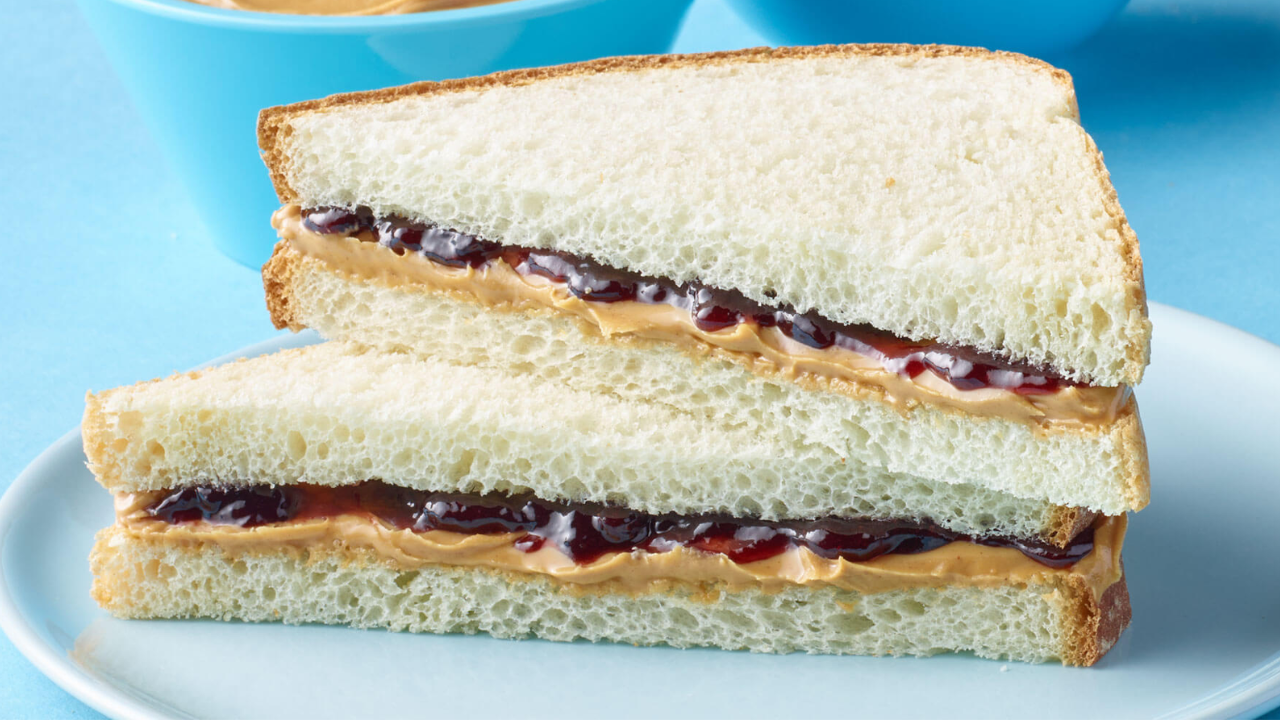
Few foods are as deeply woven into American childhood as the peanut butter and jelly sandwich. It’s the lunchbox staple generations grew up with, the after-school snack that required no instructions, and the comfort food that somehow still tastes right well into adulthood. Simple, affordable, and endlessly satisfying, the PB&J is more than just bread, peanut butter, and jelly—it’s a cultural icon.
But as familiar as it feels, the peanut butter and jelly sandwich wasn’t always part of everyday life. Like many beloved foods, it had a beginning. Its rise from an elite novelty to a nationwide staple is a fascinating story shaped by innovation, economics, war, and changing food habits.
Why PB&J Feels Like the Perfect Sandwich
For many families, the PB&J was a weekday constant. It didn’t require cooking skills, refrigeration, or fancy ingredients. For parents, it was efficient. For kids, it was dependable.
There are good reasons why it worked so well:
- Affordable ingredients that didn’t strain household budgets
- Soft texture that appealed to young eaters
- Room-temperature stability, making it safe in lunchboxes
- Quick preparation, saving time on busy mornings
- Balanced flavors, combining salty and sweet in one bite
In many ways, the PB&J solved the lunch problem before anyone realized it needed solving.
Peanut Butter Before PB&J
It’s easy to assume peanut butter has always been a pantry staple, but that’s not the case. In the late 19th century, peanut butter was considered something of a specialty item. It gained attention after being introduced to a wider audience at the 1893 World’s Fair in Chicago, where it was promoted as a nutritious protein-rich food.
Early peanut butter was often served in upscale settings and paired with ingredients that feel unusual today, such as watercress or pimentos. It wasn’t something children casually ate at home, and it certainly wasn’t cheap.
The First Peanut Butter and Jelly Sandwich
The earliest known reference to combining peanut butter and jelly into a sandwich dates back to 1901, when a recipe describing the pairing was published. At the time, this combination was seen as creative and novel rather than ordinary.
Bread and spreads existed separately, of course, but the idea of layering peanut butter with fruit preserves on sliced bread hadn’t yet entered mainstream eating habits. It would take a few critical developments for the PB&J to truly take off.
The Role of Technology and Convenience
Several innovations in the early 20th century paved the way for the PB&J’s popularity.
Pre-Sliced Bread
Before the 1920s, most people sliced bread at home. The invention of commercially pre-sliced bread made sandwich-making faster and more consistent, lowering the barrier to everyday use.
Mass-Produced Jelly
Around the same time, new methods for producing shelf-stable fruit preserves made jelly more widely available and affordable. Grape jelly, in particular, became popular because it was easy to store and appealingly sweet.
Improved Peanut Butter Production
Advances in processing made peanut butter smoother, more consistent, and cheaper. Once grocery stores began stocking it regularly, it moved out of high-society kitchens and into everyday households.
From Luxury to Necessity During Hard Times
The Great Depression dramatically reshaped American eating habits. Families needed foods that were inexpensive, filling, and versatile. The PB&J fit perfectly.
With just a few ingredients, households could create a meal that provided calories, protein, and satisfaction without requiring meat or refrigeration. Peanut butter and jelly sandwiches became a practical solution during a time when practicality mattered more than novelty.
World War II and the PB&J Boom
The turning point that cemented the PB&J’s place in American culture came during World War II. Peanut butter and jelly were included in military rations because they were:
- Easy to transport
- Shelf-stable
- High in energy
- Simple to eat, even one-handed
Soldiers grew accustomed to the sandwich overseas, and when they returned home, they brought that habit with them. What had once been a convenient food became a nostalgic one, tied to home, comfort, and normalcy after years of hardship.
The PB&J as a Childhood Ritual
By the mid-20th century, the peanut butter and jelly sandwich was firmly embedded in American family life. It became a rite of passage—often one of the first foods children learned to make themselves.
Many people can recall the specifics:
- A favorite jelly flavor
- A preferred ratio of peanut butter to jelly
- Whether the crusts stayed on or came off
These small details turned a simple sandwich into something deeply personal.
Variations Through the Years
While the classic version remains iconic, the PB&J has evolved with time:
- Whole wheat bread replaced white for some
- Crunchy peanut butter gained popularity alongside smooth
- Alternative nut butters emerged due to allergies and dietary preferences
- Creative swaps introduced bananas, honey, or marshmallow spread
Despite these variations, the original peanut butter and jelly combination remains unmatched in its cultural staying power.
Why PB&J Endures
Unlike many food trends that come and go, the PB&J has lasted because it satisfies fundamental needs:
- Comfort without complexity
- Flavor balance without excess
- Familiarity across generations
It doesn’t try to be impressive. It doesn’t need reinvention. It simply works.
More Than a Sandwich
Today, peanut butter and jelly sandwiches are celebrated with their own dedicated day and referenced as symbols of childhood, simplicity, and Americana. They appear in pop culture, school cafeterias, and late-night snacks alike.
What started as a novel idea in the early 1900s has become one of the most recognizable foods in the country. It’s proof that innovation doesn’t always come from complexity—sometimes, it comes from pairing two good things together at just the right time.
So the next time you bite into a PB&J, remember: you’re not just eating a sandwich. You’re tasting a century of history, shaped by invention, necessity, and a universal love for something simple done right.